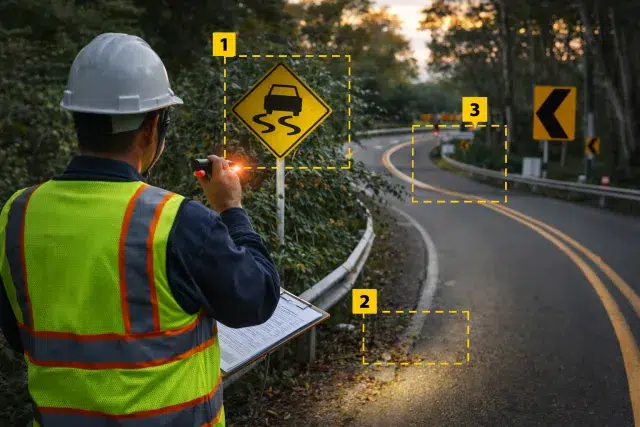
If you have ever driven through an intersection that “feels” risky even when the signs look fine, you already understand the heart of Road Safety Audit Tricks. A road can meet design standards and still hide hazards that cause near misses, sudden braking, and serious crashes. The good news is that you do not need to be a veteran highway engineer to spot many of these issues. With the right mindset, a simple process, and a few field-tested tricks, you can learn to read the road the way safety auditors do: looking for what drivers, pedestrians, cyclists, and motorcyclists actually experience in real life.
This article breaks down practical, professional-style techniques to help you identify hidden risks before they hurt someone. You will also see real-world scenarios, easy checklists, and a clear structure you can reuse for your own reviews.
What a Road Safety Audit really is (and what it is not)
A Road Safety Audit (often shortened to RSA) is a formal safety performance examination of an existing or future road or intersection carried out by an independent, multidisciplinary team. The goal is to identify potential safety issues for all road users and recommend improvements.
A quick but important point: an audit is not the same thing as a compliance check. A road can “pass” standards and still be dangerous in practice. Audits are designed to catch the human-factor gaps: confusion, visibility problems, workload spikes, and predictable mistakes.
Why this matters more than ever
Road crashes are not rare events. Globally, road traffic deaths are estimated at about 1.19 million per year, and road traffic injuries remain a leading cause of death for children and young adults aged 5–29.
That is exactly why smart, proactive safety work matters, especially before a “black spot” becomes known for tragedies.
The mindset shift that makes you good at audits
Most people look at roads like this: “Is the sign there? Is the lane painted? Is the light working?”
Auditors look like this: “What mistake is the road silently inviting, and what happens when it occurs?”
Here is the core mental model professionals use:
- People will miss information sometimes.
- People will misjudge speed gaps sometimes.
- People will follow the path that feels natural, even if it is not intended.
- People will behave differently at night, in rain, under glare, or in heavy traffic.
- Vulnerable road users pay the highest price when design is unforgiving.
Once you adopt that lens, the “hidden hazards” start showing themselves.
Road Safety Audit Tricks you can use immediately
Below are practical Road Safety Audit Tricks that mirror how real audits are conducted, but explained in simple, usable steps.
Trick 1: Do a “first-time visitor” drive
Even if you use the route daily, you must experience it as a new driver would.
How to do it:
- Approach the location from each direction.
- Pretend you do not know which lane goes where.
- Watch what information you get, and when you get it.
Red flags:
- Signs appear too late for a safe lane change.
- Lane arrows show up after the decision point.
- The layout looks different from what drivers expect (like a sudden merge near a busy junction).
If you find yourself thinking, “Wait… where do I go?” that is valuable data.
Trick 2: Audit at the worst times, not the easiest times
A big mistake is auditing at midday in perfect weather. Professional audits deliberately include challenging conditions.
Do at least two site checks:
- Peak hour (high stress, high conflict)
- Nighttime (visibility and glare reveal issues fast)
Why this works: visibility problems do not announce themselves in daylight. At night you notice missing reflectors, confusing signs, and “black holes” where pedestrians disappear.
FHWA guidance emphasizes audits for existing and future facilities and the importance of considering all users, which is exactly why time-of-day checks matter.
Trick 3: Follow the eyes, not the rules (the “eye-path” test)
People react to what they can see and process, not what the design manual intended.
Try this:
- Stand at a driver’s stopping position and look ahead.
- Ask: what is the most visually dominant thing?
- Then ask: is that the correct guidance?
Common “eye-path” problems:
- Advertising boards distract from warning signs.
- Bright storefront lighting hides signals.
- Complex sign clusters create information overload.
If a driver must read too much too quickly, they will guess. Guessing at speed is where crashes begin.
Trick 4: Hunt for “forgiving design” failures
When errors happen, does the road forgive them, or punish them?
Look for:
- Fixed objects close to the roadway (poles, trees, sharp-edged barriers)
- Unprotected drop-offs or steep slopes
- Narrow shoulders with no recovery space
These are the spots where a minor drift becomes a fatal crash. Your job in an audit is to reduce the consequences of predictable mistakes.
Trick 5: Use the “conflict mapping” walk
This trick is gold at intersections.
How:
- Walk all legs of the intersection like a pedestrian.
- Stand where pedestrians would wait.
- Note every place where paths cross: turning vehicles vs pedestrians, merging traffic vs cyclists, etc.
Then draw a quick conflict map:
- Mark vehicle paths with arrows
- Mark pedestrian crossing desire lines
- Mark where conflicts happen and what controls exist
Hidden hazards you often find:
- Right turns cutting across crosswalks with poor sight lines
- Fast slip lanes that feel like highways in the city
- Crossings placed where drivers are busy scanning for other cars, not people
Trick 6: Measure the “decision distance” with common sense
You do not need fancy tools to catch this: you just need to ask whether a driver has enough time to understand and react.
Ask:
- How far back does a driver first receive the correct instruction?
- Is that enough distance to slow down, choose the lane, and execute safely?
If your audit location includes heavy vehicles or unfamiliar drivers (tourists, delivery drivers), increase your caution. Unfamiliarity amplifies risk.
Trick 7: Search for “silent speed cues”
Speed is often decided by environment cues, not speed limit signs.
Look for cues that encourage speed:
- Wide lanes and long straight lines
- Lack of trees, street furniture, or roadside activity
- Minimal friction (few visual elements)
- Downhill approaches into intersections
If the road visually suggests “go fast” but the area has crossings, shops, schools, or turning traffic, you have a mismatch. That mismatch causes crashes.
Trick 8: Audit the transition zones (where drivers change behavior)
Transitions are where errors cluster:
- Rural to urban
- High-speed to low-speed
- Two-lane to multi-lane
- Free-flow to signalized
In these zones, people are adjusting mentally and physically. If the design does not clearly communicate the change early, late braking and sudden lane changes follow.
Trick 9: Look for “predictable wrong-way moves”
If a road layout allows a wrong-way entry, it will happen eventually.
Check:
- Median openings that resemble entry points
- Service roads that connect awkwardly
- U-turn slots that are unclear at night
- Roundabouts with confusing approach markings
A simple “can I accidentally enter wrong?” test is one of the most underrated audit techniques.
Trick 10: Review skid risk and drainage like a detective
Many severe crashes involve loss of control. While crash data helps, you can spot risk visually.
Look for:
- Polished pavement at braking zones
- Water pooling marks after rain
- Rutting near bus stops and intersections
- Oil and dust buildup in slow-moving lanes
If water is not draining properly, the road is silently turning into a hazard during storms.
A quick table: hidden hazards and what to check
| Hidden hazard type | What it looks like in real life | Quick checks you can do |
|---|---|---|
| Late information | Sudden lane changes, last-second braking | Are signs and arrows visible early enough? |
| Poor night guidance | Drivers “searching” with headlights | Reflectors, markings, sign lighting, glare sources |
| Turning conflicts | Near misses at corners | Right-turn speeds, crosswalk placement, sight lines |
| Speed mismatch | Fast traffic near vulnerable users | Lane width cues, approach geometry, roadside activity |
| Confusing geometry | Hesitation, wrong turns | Is the path obvious without local knowledge? |
| Run-off-road severity | Small errors become big crashes | Clear zones, shielding, object placement |
The audit process in plain language
Even official guidance frames an RSA as a structured examination with clear outputs.
Here is the process, simplified for practical use:
1) Define the scope
- Which segment or intersection?
- Which users? (always include pedestrians and motorcyclists if present)
- What is the purpose? (existing issue, new design, recurring crash type)
2) Gather fast context
You do not need a perfect database to start, but you should collect:
- Basic traffic volumes if available
- Speed expectations (posted and actual)
- Known complaint patterns (near misses, sudden braking, risky turns)
3) Field visits (day and night)
This is where your best findings happen. Take photos and notes from:
- Driver eye height
- Pedestrian eye height
- Cyclist perspective if relevant
4) List findings as “risk statements”
Avoid vague notes like “improve signage.”
Write: “Drivers approaching from the west receive lane guidance too late, leading to sudden merges near the stop line.”
5) Recommend improvements ranked by impact and practicality
Good recommendations are:
- Specific (what, where)
- User-focused (who benefits)
- Realistic (cost and time awareness)
6) Document and follow up
An audit is only powerful if recommendations move into action.
Real-world scenario: the “perfectly legal” intersection that keeps crashing
Imagine a four-leg signalized intersection near shops. It meets standards:
- Signal heads working
- Markings present
- Speed limit posted at 50 km/h
But you observe:
- Right-turning vehicles are fast because the corner radius is wide.
- Pedestrians cross near a bus stop, but drivers are scanning for gaps in oncoming cars.
- At night, a bright storefront creates glare that makes the crosswalk less visible.
Hidden hazard: the design creates high-speed turns and attention conflict.
Practical fixes could include:
- Tightening corner radius or adding a turning calming element
- Adding advance stop lines or better crosswalk lighting
- Adjusting signal phasing or adding leading pedestrian intervals where appropriate
This is exactly the type of problem audits are meant to uncover: not just “what exists,” but “how it behaves.”
Advanced Road Safety Audit Tricks used by pros
Use “near-miss evidence” when crash data is missing
Not every place has reliable crash databases. Auditors often use behavioral evidence:
- Tire marks near the same spot
- Repeated hard braking
- Regular horn usage
- Pedestrian hesitation patterns
These are early warnings. Treat them as seriously as crash records.
Borrow concepts from risk rating systems
Infrastructure risk rating approaches (like star-rating style frameworks) focus on how road attributes influence risk.
Even if you are not running a formal rating, you can adopt the thinking: speed, separation, predictability, and protection.
Write recommendations as “layers”
A strong audit report usually offers:
- Quick wins (sign placement, markings refresh, visibility trimming)
- Medium actions (channelization changes, crossing upgrades)
- Big moves (geometry redesign, grade separation, protected facilities)
This gives decision-makers options and keeps your report from being ignored as “too expensive.”
Common questions people ask (and clear answers)
How is a Road Safety Audit different from a normal inspection?
An inspection often checks condition and compliance. A Road Safety Audit focuses on how road users behave, what errors are likely, and how to reduce both crash likelihood and severity.
Do audits only apply to highways?
No. Audits are used for intersections, school zones, urban corridors, rural roads, and even designs that have not been built yet.
Are audits worth the time and cost?
FHWA materials discuss evaluating RSA programs and encourage learning from quantified benefits in practice, especially where proactive changes prevent harm.
The simple way to think about it: preventing even one serious crash can outweigh many low-cost improvements.
What are the most overlooked hazards?
In real audits, a few repeat offenders show up constantly:
- Poor night guidance and reflectivity
- Fast turning speeds at corners
- Late or confusing lane guidance
- Visual clutter and sign overload
- Pedestrian crossings placed where drivers are busiest scanning for cars
How to write findings that get taken seriously
If you want your audit to lead to action, your writing matters.
Use this format:
- Location: “Northbound approach, 60m before stop line”
- Observation: “Lane markings worn; arrow appears late”
- Risk: “Drivers merge suddenly near the intersection, sideswipe risk”
- Who is affected: “Passenger cars, motorcycles, cyclists”
- Recommendation: “Refresh markings and add advance lane assignment signage earlier”
This style reads like a problem-solving report, not a complaint list.
A simple mini checklist you can reuse
Before you leave the site, confirm you checked:
- Approach visibility (each direction)
- Sign timing and clarity
- Markings quality and nighttime reflectivity
- Turning paths and turning speeds
- Pedestrian desire lines and crossing safety
- Bus stops, schools, markets, and generators of foot traffic
- Drainage and skid risk spots
- Fixed-object hazards near run-off zones
- Transitions and merges
- Wrong-way entry risks
Conclusion: think like an auditor, not just a road user
The biggest secret behind Road Safety Audit Tricks is not a fancy tool or a complicated formula. It is the ability to step outside your own routine and see the road as a system that shapes human behavior. When you combine first-time-driver thinking, night audits, conflict mapping, and forgiving-design checks, hidden hazards stop being invisible.
If you want a simple starting point, pick one location and run two visits: one in peak traffic and one at night. Take notes using risk statements, then propose layered fixes from quick wins to bigger upgrades. Over time, you will develop the same pattern recognition that experienced auditors rely on.
In many places, learning the basics of how a formal audit works can also help you communicate better with engineers, planners, and local authorities. Even a basic understanding of audit principles can turn a vague complaint like “this road is dangerous” into a clear, actionable safety request that is hard to ignore.
And if you are building a culture of safer streets, remember this: roads do not fail randomly. They fail in repeatable patterns, usually in the same places, under the same conditions, to the same predictable human mistakes.