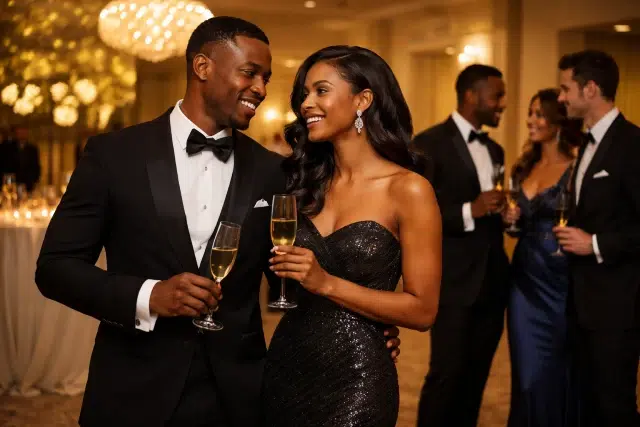
If you have ever stared at an invitation that says Black Tie and felt a tiny jolt of panic, you are not alone. In fact, a large survey commissioned by Generation Tux and conducted by Talker Research found that only about half of men could correctly identify “black tie” attire. That gap is exactly why this guide exists.
Because here’s the truth: Black Tie is not “wear something dark and call it formal.” It is a specific evening dress code with a clear look, a clear vibe, and a few easy-to-avoid mistakes. Once you know the rules, it becomes one of the simplest dress codes to get right and one of the best to look amazing in.
This article breaks it all down in plain language: what Black Tie really means, what you should wear (for men and women), what to avoid, and how to handle the modern variations like “Black Tie Optional” without feeling confused.
And yes, you’ll also learn how to look sharp in photos, stay comfortable, and avoid that awkward moment where you walk in and instantly realize you dressed for the wrong party.
What Does Black Tie Mean?
Black Tie is a semi-formal evening dress code traditionally worn for events after 6 p.m. It sits below white tie (the most formal) but above cocktail attire. At its core, it’s built around the classic tuxedo (dinner jacket), a white formal shirt, and a black bow tie.
Historically, It developed as a more relaxed alternative to white tie, becoming the standard for elegant evening events over time. The goal is timeless and polished, not trendy and loud.
The quickest way to think about it
Black Tie is “formal uniform” energy:
- Clean lines
- Elevated fabrics
- Evening elegance
- A look that respects the occasion
If you’re ever stuck between “Is this too much?” and “Is this enough?” for Black Tie, lean slightly more formal. It is one of those situations where playing it safe usually looks the most stylish.
Common Black Tie Events
You’ll usually see Black Tie on invitations for:
- Weddings (especially evening ballroom weddings)
- Charity galas and fundraisers
- Awards nights
- Formal corporate dinners
- Opera, theater openings, high-end celebrations
- New Year’s Eve formal parties
Black Tie vs Black Tie Optional vs Formal: Know the Difference
Most people don’t mess up Black Tie because they hate dressing up. They mess it up because invitations use similar words that mean different things.
Here’s a simple table to keep you on track:
| Dress code wording | What it usually means | Safest choice |
|---|---|---|
| Black Tie | Tuxedo (or dinner jacket) and formal eveningwear | Full tuxedo, bow tie, formal shoes |
| Black Tie Optional | Tux preferred, but a dark suit can pass | Tux if you have it; otherwise dark suit + tie |
| Formal / Black Tie Preferred | Strongly encourages tux, but more flexibility | Tux or very sharp dark suit, elevated accessories |
| Cocktail | Dressy but not tux level | Suit or cocktail dress (not floor-length required) |
If the invitation says Black-Tie, treat it as the real thing. Menswear experts are pretty consistent here: a tuxedo is the standard, not a regular black suit.
Black Tie for Men: What to Wear
Think of Black-Tie menswear as five core pieces, plus a few optional upgrades. Emily Post’s classic guidance still matches what you’ll see at any well-dressed event today.
1) The tuxedo (dinner jacket + matching trousers)
A proper Black-Tie tuxedo typically includes:
- Black or midnight blue jacket
- Satin or grosgrain lapels
- Matching trousers with a satin side stripe
Midnight blue is a power move if you want something classic but slightly distinctive under evening lighting. It reads rich and formal without screaming for attention.
Fit matters more than brand. A well-fitted rental will beat an expensive tux that’s too big in the shoulders or too long in the sleeves.
2) The shirt: white and formal
Go for a formal tuxedo shirt:
- White
- Pleated or piqué front (either works)
- French cuffs
- Studs optional depending on formality
A standard business dress shirt can look “off” next to a tux because the collar and cuffs aren’t made for formal accessories.
3) The bow tie (yes, usually a bow tie)
Traditional Black Tie means a black bow tie in silk, satin, or twill.
If you can tie it yourself, you instantly look more authentic because a self-tied bow has a natural shape. If you can’t, a pre-tied bow tie is still better than showing up in a long necktie when the event is strict Black Tie.
4) Waist covering: cummerbund or waistcoat
This part confuses people, but it’s simple:
- Cummerbund or evening waistcoat
- Not both
These pieces polish the midsection and create that classic evening silhouette. Emily Post notes either option can work with Black Tie.
5) Shoes: formal, black, and polished
Your shoes can make or break the look even if everything else is perfect.
Best options:
- Patent leather formal shoes
- Highly polished black calf leather dress shoes
Avoid anything chunky, casual, or textured. The more your shoes look like office shoes, the more the outfit starts to feel like “business formal,” not Black Tie.
Men’s Black Tie accessories that work
Use accessories to look refined, not loud:
- Cufflinks (simple metal, onyx, or mother-of-pearl)
- Pocket square (classic white is safest)
- Dress watch (thin, understated)
- Suspenders (braces) for comfort and cleaner lines
Men’s grooming: the quiet “sixth piece”
Black Tie is unforgiving in the best way: details show.
- Fresh haircut or clean edges
- Neat facial hair
- Clean nails
- Light fragrance (you want “pleasant,” not “announced”)
Black Tie for Women: What to Wear
Women have more flexibility with Black Tie, but the level of polish still matters. Generally, you’re aiming for eveningwear, not “date night.”
The safest Black Tie choice: the floor-length gown
A floor-length gown is the most universally correct option for Black Tie, especially for weddings and galas.
Great fabrics for Black Tie:
- Satin
- Silk
- Velvet
- Chiffon
- Crepe
- Sequins (if it fits the event)
Can you wear a cocktail dress to Black Tie?
Sometimes, yes, if it’s truly formal:
- Luxurious fabric
- Structured tailoring
- Elegant length (midi often works better than short)
- Proper accessories (heels, clutch, statement earrings)
If the crowd leans traditional or the venue is very formal, a short dress can feel underdressed even if it’s expensive.
Jumpsuits and tailored separates
A formal jumpsuit can work for Black-Tie if it looks like eveningwear:
- Dramatic silhouette
- Luxe fabric
- Structured bodice
- Elevated accessories
If you go the jumpsuit route, everything else must level up: hair, jewelry, bag, and shoes.
Shoes and accessories for women
Aim for elegant, photo-friendly, and comfortable enough to last the night:
- Heels, dressy sandals, or refined flats (depending on the event)
- Clutch or small evening bag
- Statement earrings or a bold bracelet (pick one focal point)
- Wrap, shawl, or tailored evening coat if it’s cold
What to Avoid at a Black-Tie Event
This is where people accidentally sabotage themselves. You don’t need a fashion degree, just a simple “no list.”
What men should avoid
- A regular black suit (it often reads business, not Black Tie)
- Casual shoes: loafers, sneakers, boots
- Bright novelty bow ties (unless the event is explicitly playful)
- Short-sleeve shirts
- Loud patterned shirts or shiny, costume-like fabrics
- Bulky watches and flashy belt buckles
- Mixing daywear with eveningwear (for example, tux jacket with jeans)
What women should avoid
- Casual sundresses or day dresses
- Very casual fabrics (cotton jersey, linen, simple knits)
- Extremely informal shoes (flip-flops, casual slides)
- Overly revealing outfits that distract from the event’s tone
- Heavy daytime bags (large totes, backpacks)
A quick comfort tip that also looks better
If you’re uncomfortable, you’ll look uncomfortable.
Before you leave:
- Walk around the house in your shoes for 10 minutes
- Sit down in your outfit (test zips, straps, jacket movement)
- Make sure you can dance, eat, and breathe normally
Black-Tie Outfit Examples You Can Copy
Sometimes it helps to see “complete outfits” instead of random rules.
Men: Classic and foolproof
- Black single-breasted tuxedo with satin lapels
- White pleated tuxedo shirt with French cuffs
- Black bow tie
- Black cummerbund
- Black patent shoes
- White pocket square + simple cufflinks
Men: Modern but still correct
- Midnight blue tuxedo
- White formal shirt
- Black bow tie
- Minimal cufflinks
- Highly polished black shoes
- Subtle pocket square
Women: Elegant wedding guest
- Floor-length satin gown (solid color)
- Strappy heels
- Small clutch
- Statement earrings
- Soft glam hair and makeup
Women: Gala-ready with personality
- Velvet gown or structured jumpsuit
- Bold earrings
- Sleek hair
- Metallic clutch
- Heels or refined pointed flats
How to “Read the Room” Before You Arrive
Black-Tie can vary slightly depending on location and culture, but you can usually predict the vibe with a few clues:
Check:
- Time: evening events are stricter
- Venue: luxury hotel or ballroom usually means traditional
- Host type: corporate gala vs creative-industry party
- Wording: “Black-Tie Requested” is basically Black-Tie
- Photos from last year: if it’s an annual event, this is the cheat code
If you can’t check anything, default to classic Black Tie. You will almost never regret being correctly formal.
Black Tie Planning Checklist
Use this the day before your event so you’re not scrambling two hours before pickup time.
For men
- Tux pressed and tried on
- Shirt clean, collar sits properly
- Bow tie ready (and practice if self-tie)
- Shoes polished
- Socks: black, dressy
- Cufflinks and studs (if using)
- Pocket square folded
- Lint roller (especially for black fabric)
For women
- Dress tried on with the correct bra and shoes
- Hem works with your heel height
- Backup fashion tape or safety pins
- Clutch fits essentials
- Shoes broken in enough to last
- Outerwear planned if needed
- Simple emergency kit (blister pads, lipstick, mini perfume)
FAQs About Black Tie
Is Black Tie the same as “formal”?
Not always. “Formal” can be interpreted more loosely, but Black Tie is a more defined look, especially for men.
Can men wear a dark suit instead of a tuxedo?
If the invitation says Black Tie, a tux is the standard. If it says Black Tie Optional, a dark suit is usually acceptable.
Do women have to wear a floor-length dress?
Not always, but it’s the safest option. A very formal cocktail dress or jumpsuit can work if styled at evening level.
What color should you wear to Black Tie?
Black is always safe, but Black Tie does not mean you must wear black. Deep jewel tones, metallics, and classic neutrals can all look amazing.
What is the biggest Black Tie mistake?
Treating it like “dressy office wear.” A tuxedo shirt and formal shoes exist for a reason, and they’re what separate Black Tie from business attire.
Conclusion: Black Tie Is Easier Than It Looks
Once you understand the basics, Black Tie stops being intimidating and starts feeling like a cheat code for looking your absolute best. It’s a dress code with built-in elegance: you follow a few rules, you instantly look polished, and you never have to wonder if you’re underdressed.
If you want a simple shortcut, remember this: Black Tie is about evening formality, clean details, and respect for the occasion. A great fit, proper footwear, and a refined finish will take you further than any trendy shortcut.
One last fun fact to keep in your back pocket: the Black Tie standard is so established that it’s recognized globally as a specific evening dress code, often tied to the classic idea of the tuxedo and its traditional elements.
Show up prepared, keep it classic, and let the confidence do the talking. And if you ever feel unsure, remember that many people are guessing. That same Talker Research survey found only about 53% could correctly identify Black Tie attire. Knowing the basics already puts you ahead.