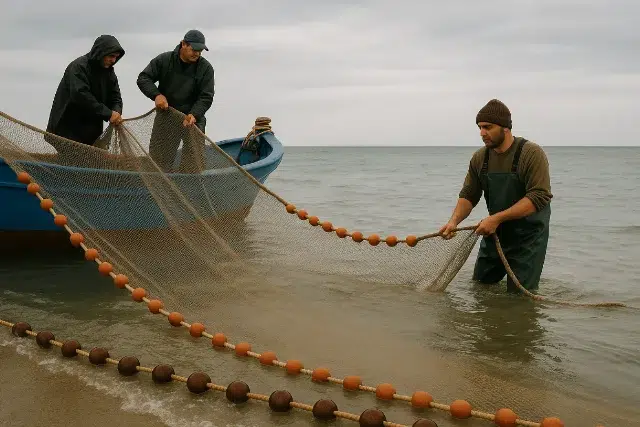
A Seine Net is a type of fishing net designed to surround and capture schooling fish by forming a vertical barrier in the water. The net features floats on the top line and weights on the bottom line, allowing it to hang vertically like a curtain. This technique has been used for centuries, from ancient coastal communities to modern industrial fleets. Today, seine net fishing remains one of the most efficient and widely adopted methods across global fisheries.
In the first moments of understanding seine netting, it becomes clear why this method dominates both marine and freshwater environments. Its versatility, effectiveness, and adaptability make it a preferred option for fishermen targeting species that migrate or swim in dense schools. This guide explores seine nets deeply — how they work, different types, sustainability considerations, and everything in between.
What Is a Seine Net?
A Seine Net is a vertically hanging fishing net, supported by floats and weighted by lead on the bottom, used to encircle and trap fish. It is deployed in a circular or semicircular shape and then hauled in to concentrate fish for harvest.
This definition highlights the two most important elements of a seine net: the vertical structure and the encirclement method.
How Seine Net Fishing Works
The effectiveness of seine net fishing lies in its simple principle: create a movable wall of mesh that fish cannot escape from. Even though the concept sounds straightforward, the process requires skill, timing, and an understanding of fish behavior.
Fishermen begin by identifying a suitable school of fish. This is often done using sonar, fish-finding equipment, or natural indicators such as seabird activity. Once a target is confirmed, the net is released into the water in a controlled arc or circle. As the boat moves, the net forms an enclosure around the school.
If the fishermen are using a purse seine, a specialized purse line is pulled to close the bottom of the net, much like tightening the drawstring of a bag. This prevents fish from diving downward to escape. As the encircled area becomes smaller, fish naturally gather in the concentrated “pocket,” where they are eventually hauled aboard using winches, power blocks, or brailer nets.
The entire process — from spotting a school to landing the catch — can happen in a matter of minutes, which is one reason seine nets are considered highly efficient.
Types of Seine Nets
While all seine nets operate on the same principle of encirclement, different fishing environments require different designs. Three major types are recognized worldwide.
Beach Seine (Shore Seine)
A Beach Seine is one of the oldest and simplest forms of seine fishing. The net is deployed from shallow waters and hauled manually or with small machinery back to the shore. This method is commonly used in coastal villages, small rivers, lakes, and estuaries.
Fishermen often work in coordinated groups, pulling the net from both ends until fish are collected near the shoreline. This approach is effective for capturing species that swim close to the surface or near beaches, such as mullet, anchovy, tilapia, and small pelagic fish.
Purse Seine
The Purse Seine represents the most advanced and efficient variation of seine nets. It features a purse line at the bottom that closes when pulled, forming a sealed “purse” that prevents downward escape. Purse seines are responsible for a significant share of the world’s commercial catch, especially for species like tuna, sardines, and mackerel.
Many purse-seine vessels now rely on sophisticated technologies including sonar, bird radar, GPS buoys, and satellite imagery that detect fish schools. The FAO reports that purse seines account for more than half of the global tuna harvest, demonstrating their scale and efficiency.
Danish Seine (Anchor Seine)
The Danish Seine blends elements of seining and trawling but is gentler on marine ecosystems. Instead of dragging heavy nets along the seabed, Danish seining uses long ropes to herd fish toward the net’s opening.
This technique is popular in Northern Europe and is particularly effective for bottom-dwelling species like cod, haddock, and whiting. It uses less fuel compared to traditional bottom trawling and causes significantly less environmental disturbance.
Seine Net Equipment and Components
A seine net consists of several vital components that work together to form an effective fishing system. The top of the net is equipped with floats that keep it at the surface, while the bottom line, known as the leadline, is weighted to ensure it sinks vertically. This creates the essential wall-like structure.
Purse seines include additional features such as purse rings and a purse line that threads through these rings. When fishermen pull the purse line, the bottom closes tightly. Danish seines are characterized by long ropes that extend from the wings of the net, allowing broader herding capability.
Mechanical equipment plays a significant role in modern seine fishing. Power blocks mounted on cranes help lift the heavy nets, while hydraulic winches and haulers reduce labor intensity. On large vessels, brailing nets or fish pumps are used to transfer fish from the seine pocket to the hold efficiently.
Species Commonly Caught Using Seine Nets
The species caught with seine nets depend on the type of seine and the fishing location. Pelagic species, which swim in open water near the surface, are particularly well-suited for purse seining. These include anchovy, sardine, tuna, and mackerel. In freshwater environments, seine nets successfully capture carp, catfish, and tilapia.
Danish seining targets demersal fish living near or on the seabed. These species respond well to the herding effect created by the ropes, which guide them into the net’s central chamber.
Benefits of Seine Net Fishing
Seine net fishing offers several advantages that contribute to its popularity. It is highly efficient, capable of capturing large amounts of fish in a relatively short period. This efficiency reduces fuel usage and operational costs, especially in comparison to trawling.
When used with proper oversight, seine nets result in less bycatch than many other commercial techniques. Fishermen can often identify the species within the enclosure before hauling the net completely, allowing for selective harvesting. Additionally, most seine nets do not drag along the seabed, which helps preserve marine habitats and reduces ecological impact.
The method is also versatile. Seine nets can be used effectively in oceans, lakes, rivers, and even aquaculture environments. Their adaptability across ecosystems contributes significantly to global food supply chains.
Environmental Impact and Regulations
While seine net fishing is considered more sustainable than many alternatives, it is not without environmental concerns. Overfishing of schooling species poses a serious threat, especially when large purse-seine fleets target fish during spawning seasons. Mixed-species schools can increase the risk of catching non-target species, including marine mammals or juvenile fish.
Most countries enforce strict regulations to counter these risks. Authorities such as FAO, NOAA, ICCAT, and regional fisheries management organizations oversee guidelines for mesh size, catch quotas, fishing seasons, and monitoring systems. Purse-seine vessels targeting tuna must follow dolphin-safe protocols and are frequently monitored by onboard observers or electronic surveillance.
When properly regulated, the environmental footprint of seine net fishing is significantly lower than that of bottom trawling or gill netting.
The Complete Seine Net Fishing Process
The process begins with locating fish. Modern purse seiners use powerful sonar systems to detect dense schools. Once identified, the vessel positions itself strategically, and the net is released into the water. As the boat moves in a wide arc, the net unfurls completely.
After forming a circle, the purse line is pulled to close the bottom of the net, ensuring no fish can escape downward. The hauling process then begins, with the net gradually pulled toward the vessel. As the enclosed area shrinks, fish concentrate inside the final pocket or bunt.
Crew members then use brailers or pumps to transfer the concentrated fish into storage tanks. These tanks are typically filled with chilled seawater to preserve freshness. The process is fast, efficient, and designed to keep the fish in good condition.
Seine Net vs Other Fishing Methods
Compared with gill nets, trawls, and cast nets, seine nets occupy a unique space. Gill nets trap fish by their gills, making them more likely to catch unwanted species. Trawl nets scrape along the seafloor or mid-water and can damage habitats or require high fuel consumption. Cast nets are environmentally friendly but have very low yield.
Seine nets offer a strong balance between efficiency, selectivity, and ecological impact, making them favored by modern fisheries.
Frequently Asked Questions About Seine Net Fishing
Is Seine Net fishing sustainable?
It can be highly sustainable when regulated. Purse seining, in particular, has a relatively low environmental footprint compared to trawling.
Can Seine Nets be used in rivers?
Yes, especially beach seines and small-scale seines used in shallow freshwater systems.
Do Seine Nets harm dolphins or large marine animals?
Modern fleets follow dolphin-safe regulations and often release non-target species before full retrieval, significantly reducing risks.
How deep can a purse seine operate?
Some large purse seines can reach depths of up to 200 meters, allowing fishermen to target deep-swimming pelagic fish.
What makes a purse seine different from other net types?
Its unique purse line allows the bottom to close completely, preventing escape.
Conclusion: Why Seine Nets Matter in Modern Fisheries
A Seine Net remains one of the most valuable tools in modern fishing, offering a combination of efficiency, sustainability, and adaptability that few other methods can match. Whether used by small artisanal communities or global commercial fleets, seine nets play a foundational role in feeding millions of people around the world. When implemented responsibly and regulated effectively, seine net fishing maintains fish populations, reduces environmental harm, and supports the long-term stability of marine ecosystems.
Understanding how a seine net works helps provide insight into global seafood production and highlights the importance of sustainable fishing methods. Seine netting, when managed carefully, can continue to be a vital contributor to food security and marine conservation for generations.