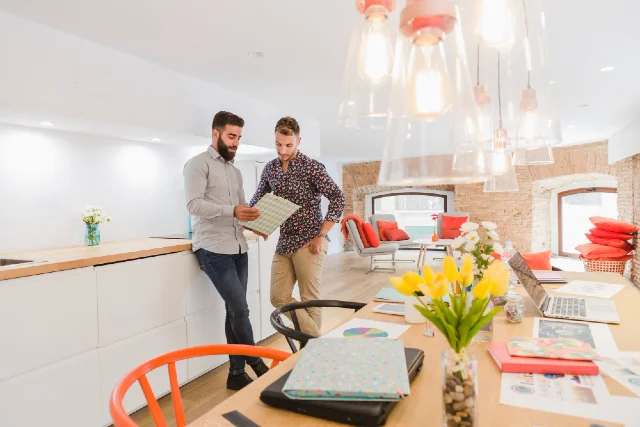
Many homeowners overlook the power of lighting when it comes to transforming the look and feel of a room. The right lighting can do more than illuminate a space. It can make a small room feel open, airy, and much larger than it actually is. By understanding how to strategically use different types of light, you can create the illusion of extra space and elevate the overall ambiance of your home.
Use Layered Lighting
Layered lighting is the combination of ambient, task, and accent lighting. Ambient lighting provides overall illumination, usually through ceiling fixtures or recessed lights. Task lighting focuses on areas where specific activities occur, such as reading or cooking, while accent lighting highlights architectural features, artwork, or decor elements. By layering these different types of light, you create depth and dimension, making rooms appear larger and more visually interesting.
Emphasize Vertical Space
One common mistake in small spaces is focusing only on horizontal areas. Drawing the eye upward can make a room feel taller and more spacious. Installing ceiling-mounted fixtures or hanging lights slightly above eye level can achieve this effect. Consider using floor lamps or wall sconces that direct light upward, enhancing the perception of height and openness in your rooms.
Incorporate Reflective Surfaces
Lighting is amplified by reflective surfaces, which can bounce light around the room and reduce shadows. Mirrors, glossy furniture, or metallic accents can make even a dimly lit room feel brighter and larger. Position mirrors across from windows or light sources to maximize the effect, creating a sense of depth that tricks the eye into seeing more space than actually exists.
Choose the Right Fixtures
The type of light fixture you choose can have a significant impact on a room’s perceived size. Fixtures that take up too much visual space can make a room feel cramped. Opt for minimalist designs or fixtures that draw the eye upward. Lantern style pendant lights that are available at City Lights, for example, provide a sense of openness and elegance without overwhelming a space. Their structured, airy design can complement a variety of interiors, from modern to traditional, while enhancing the room’s vertical dimension.
Use Warm and Cool Tones Strategically
The color temperature of your lights also affects perception. Warm light creates a cozy atmosphere but can sometimes make a room feel smaller if overused. Cool light, on the other hand, tends to feel more spacious and airy. Combining both tones in the right balance, for instance cool ambient lighting with warmer task lighting, can create a welcoming environment that feels larger than it is.
Highlight Architectural Features
Use lighting to draw attention to features like crown molding, built-in shelves, or textured walls. This technique adds layers and depth, which makes rooms feel more expansive. LED strip lights under cabinets, recessed spotlights, or wall washers can achieve this effect without cluttering the space.
Maximize Natural Light
Finally, never underestimate the power of natural light. Keep windows unobstructed with sheer curtains or blinds that can be fully drawn back. Pair natural light with artificial sources to maintain brightness throughout the day. A sunlit room is immediately perceived as larger, more open, and inviting.
By combining these strategies, you can use lighting not only to illuminate your home but also to enhance its spatial perception. With thoughtful placement, fixture selection, and a mix of tones, even the coziest rooms can feel expansive and airy.